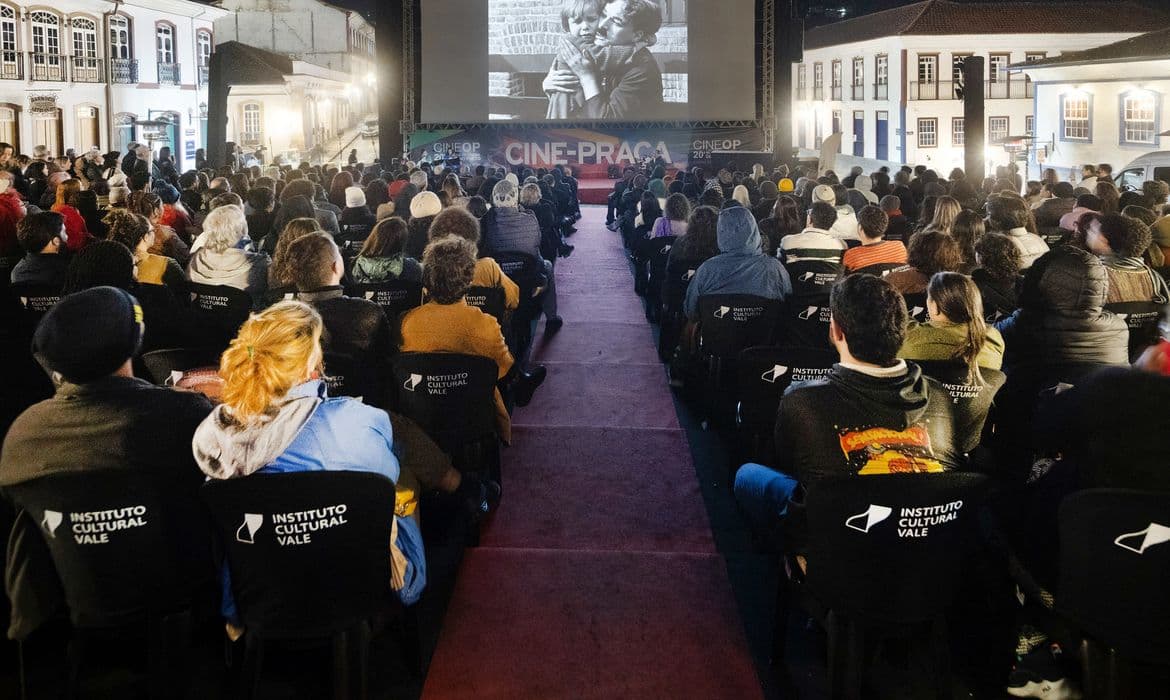
The sloping streets of Ouro Preto - a World Heritage city - will once again be filled with cinema, not merely through screens set up in public squares, museums, and cultural centers, but through an urgent reflection on…
From June 25 to 30, this historic city in the state of Minas Gerais will host the 21st edition of CineOP – Ouro Preto Film Festival, the only Brazilian event dedicated exclusively to cinema as cultural heritage. More than just a festival, CineOP has established itself over the course of two decades as a strategic space for audiovisual preservation, audience development, and the formulation of policies for the sector.
Notícias relacionadas:
This year’s theme encapsulates the event’s mission: “A country exists in the images it preserves.”This seemingly simple phrase opens a profound discussion about memory, identity, and belonging in an era of excessive digital production and the instantaneous circulation of images.
“‘A country exists in the images it preserves’ - this is precisely the reflection proposed here: ‘what we choose to keep says a great deal about who we are and what we wish to pass on to future generations, ” said CineOP director Raquel Hallak.
According to her, preservation goes far beyond merely storing archives.
CineOP director Raquel Hallak – Leo Lara / Universo Produção“Preserving audiovisual memory is not just about conserving collections; it is about ensuring access, context, and the enduring presence of these works as a living part of culture,” Hallak noted.
Over the course of six days, the historic city will transform into a vast open-air cinema. A total of 135 films - including feature-length, medium-length, and short films - will be screened across 42 free sessions, held in iconic locations such as Tiradentes Square and the Inconfidência Museum.
However, CineOP is not limited to film screenings. It organizes debates, research gatherings, workshops, educational forums, international masterclasses, and the traditional National Meeting of Brazilian Audiovisual Archives and Collections, bringing together professionals who are shaping the future of audiovisual memory in Brazil.
The festival dedicates one of its three main pillars to education. The Education Showcase brings together films produced in school settings, pedagogical experiments, and works that use audiovisual media as a tool for discovery, reflection, and social transformation.
Tribute
The festival’s main honoree this year is filmmaker Helena Solberg, a pioneer of Brazilian cinema and one of the most important voices in women’s audiovisual production in Latin America.
Her career will be celebrated through special screenings, debates, and a retrospective of her work.
Reflecting on her history for this tribute, Solberg offers an intimate perspective on a career built between Brazil and the United States: “I gauge my life by my films. I’ve made about 20 films and lived cinema intensely. It was the one thing that was always with me,” she stated.
Filmmaker Helena Solberg, a pioneer of Brazilian cinema – Ique Esteves / Universo ProduçãoIn the 1960s, amid Brazil’s political and cultural transformations, she created A Entrevista (1966), a work that would become a landmark of Brazilian feminist cinema. The film, which opens the tribute program at CineOP, brings together testimonies from young women reflecting on marriage, independence, and freedom.
The filmmaker lived in the United States for about three decades and says it was precisely while abroad that she deepened her connection to Brazil: “The irony is that I felt closer to Brazil when I was in the United States. There, I was Latin American. I began to view Latin America differently.”
This perspective resulted in seminal works on identity, politics, and women’s rights, cementing a filmography that transcends borders and generations.
“You have to discover what you have to say. Often, we don’t know. And those moments of doubt are creative, because they force us to seek what we truly want to express,” added Solberg.
Marking its 21st anniversary, CineOP reaffirms its unique position in the Brazilian cultural landscape. While many festivals focus on film premieres, this event broadens the conversation to fundamental cultural themes: preservation, education, memory, and heritage.
*The reporter traveled at the invitation of CineOP.
Originally published by Agência Brasil


Comments
Loading the conversation…
Comments are moderated after they go up. Anything abusive, defamatory or off-topic gets removed — see the comment policy.